Best camp stoves for car camping
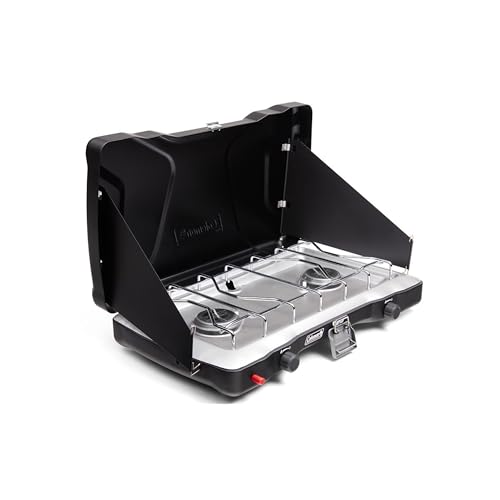
Coleman Triton+ 2-Burner Propane Camping Stove with InstaStart
$99.39The Triton+ is Coleman's updated 2-burner propane stove, adding push-button InstaStart ignition and independently adjustable burners with the brand's PerfectFlow regulator, so there's no fumbling with a lighter in the wind. It runs on standard 16.4 oz propane cylinders sold at nearly every gas station and outdoor retailer near a campground, and dual wind guards help keep both burners lit at an exposed site.
Check price on AmazonSpecsNot sure what size you need? Run the How long will my propane last first, then come back to the picks.
Beginner, intermediate and expert picks
Beginner: Single burner, butane
For solo or couple car campers who mostly boil water and cook one pot at a time.- Beginner pick
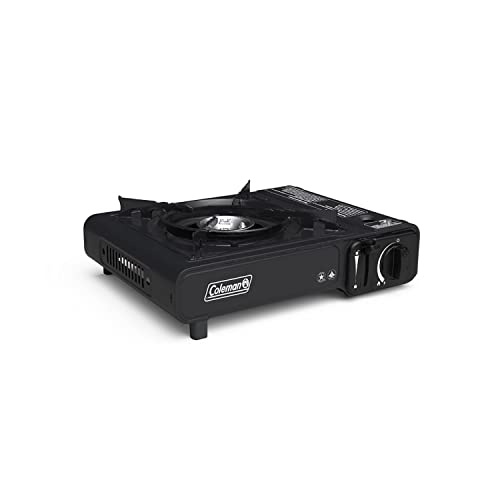 Coleman Classic 1-Burner Butane Stove$39.99Check priceSpec sheet
Coleman's Classic 1-Burner runs on cheap butane canisters instead of propane, at 7,650 BTU, enough for boiling water and simmering one pot. It packs into its own carry case and costs less than a single 2-burner propane setup.
Skip it if: Families cooking multiple dishes at once, or anyone camping regularly in cold weather; butane loses pressure and performance below about 40F.
Intermediate: Buy once
For families who want two independent burners and don't want to fight a lighter in the wind.- Intermediate pickColeman Triton+ 2-Burner Propane Camping Stove with InstaStart$99.39Check priceSpec sheet
This is the topPick and the right buy-once choice for most car camping families: two independently adjustable propane burners, push-button ignition, and dual wind guards, running on cylinders sold nearly everywhere near a campground.
Skip it if: Anyone who needs restaurant-level output for a big group; step up to a higher-BTU 2-burner or a 3-burner stove instead.
Expert: High-output 2-burner
For families who cook full meals at camp, or anyone who's outgrown a basic 2-burner's output.
Camp Chef's Everest 2X puts out 40,000 BTU total across two burners, with independent simmer control that a basic camp stove's on-off style valves don't offer as precisely. At $212.44 it's priced well above an entry 2-burner, and the larger cast valve stems and grates add real weight and packed size versus the Coleman.
Skip it if: Weekend campers who mostly boil water or reheat; the extra output and simmer control go unused without real cooking to do, and the added bulk isn't worth it for occasional trips.
| Product | Price | Output | Best for |
|---|---|---|---|
| Coleman Classic 1-Burner Butane | $39.99 | 7,650 BTU | Solo camper, boiling water |
| GasOne Dual Fuel | $59.99 | 15,000 BTU | Propane or butane flexibility |
| Coleman Triton 2-Burner | $83.99 | 22,000 BTU total | Budget 2-burner with a confirmed BTU rating |
| Coleman Triton+ 2-Burner InstaStart | $99.39 | 2 burners, PerfectFlow, push-button ignition | Best all-around family stove |
| Camp Chef Mountain Kodiak 2-Burner | $103.99 | 20,000 BTU total (10,000 per burner) | Independent burner control |
| Camp Chef Everest 2X | $212.44 | 40,000 BTU total | High-output, real simmer control |
Propane or butane for a car camping stove?
Propane is the better default for car camping: 16.4 oz cylinders are sold nearly everywhere near campgrounds, hold pressure down to about 40F, and a 20 lb tank with an adapter hose works out cheaper per BTU on trips of 3 or more days. Butane canisters are lighter and cheaper up front but lose pressure and vaporize poorly near freezing, which rules them out for cold-weather trips.
For the full tradeoff, see propane vs butane stove. Dual-fuel stoves like the GasOne above run on either, which is useful if you already own canisters from a different device.
How long will a propane cylinder last on a camp stove?
A 1 lb propane cylinder holds about 21,600 BTU. A 2-burner stove at 10,000 BTU per burner run flat out on high can empty a cylinder in about an hour, but typical cooking runs closer to 60 percent throttle, so real burn time is longer than the high-heat number on the box suggests.
Run a specific stove's BTU rating through the propane burn time calculator to estimate cylinders needed for a trip, and check the propane burn time chart for reference numbers across common stove sizes.
How many burners does a family actually need?
One burner covers boiling water and a single pot, enough for coffee and instant meals. Two burners let you run eggs and coffee, or a pot and a pan, at the same time, which is the practical minimum for a family breakfast without a lot of waiting.
Three burners, like the Coleman Classic 3-Burner, only pay off if you're regularly cooking more than two dishes at once; otherwise the extra size and cylinder use go unused.
What BTU output actually matters for camp cooking?
Higher BTU means faster boil times and better simmer control at low heat, not just a bigger flame. A stove rated well under 10,000 BTU per burner, like the single-burner butane stoves, is fine for boiling water but struggles to properly sear or reduce a sauce.
For most family car camping, 20,000 to 24,000 BTU total across two burners, in the range of the Triton and GasOne options above, covers real cooking without the bulk of higher-output stoves like the Everest 2X.
Is it safe to cook with a camp stove inside a tent?
No. A propane or butane stove burning inside a tent, canopy or closed car produces carbon monoxide, which builds up in an enclosed space and is odorless, so there's no warning before it becomes dangerous. Cook outside, in open air, every time, even in rain, wind or cold.
See carbon monoxide camping safety for the full rundown on ventilation and where it's actually safe to run fuel-burning gear at a campsite.
How we chose
Every stove here is picked from its manufacturer-listed BTU output, fuel type and burner count, cross-checked against patterns in verified owner reviews, not from cooking on these stoves ourselves.
We left off any stove whose listing didn't clearly state BTU output, and described those by burner count and features instead.
Buying tips
Do I need a windscreen?
Most 2-burner stoves include fold-out wind guards; in open, breezy campsites they meaningfully cut fuel use and cook time versus an exposed flame.
Should I buy a 20 lb tank instead of small cylinders?
For trips of 3 or more days, a 20 lb tank with an adapter hose is cheaper per BTU than buying multiple small 16.4 oz cylinders, though it adds weight and needs its own cargo space.
Cast iron or nonstick grates?
Cast iron grates hold heat more evenly for searing but need more cleanup; most camp stove grates are simple stamped or chrome-plated steel, fine for pots and pans rather than direct grilling.
Do I need a stove and a griddle?
Not always: a stove cooks in pots and pans, a griddle cooks flat foods like pancakes and burgers directly on a hot surface. See camp stove vs griddle for which one a given trip's menu actually needs.
Also worth considering
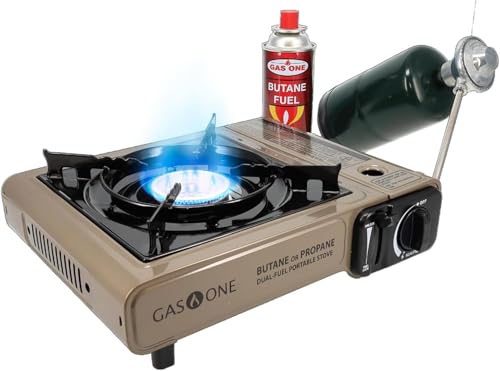 Gas One GS-3400P Propane or Butane Stove Dual Fuel Stove Portable$29.99Check priceSpec sheet
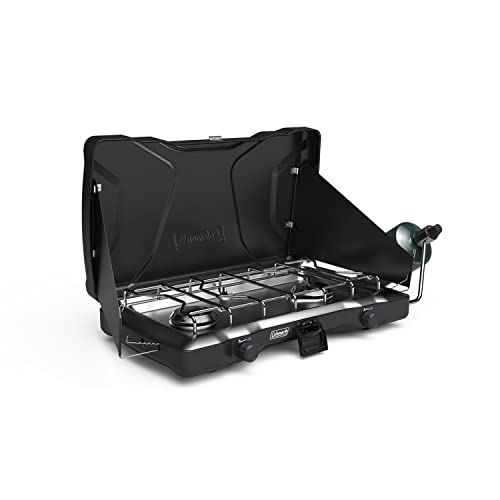 Coleman Triton 2-Burner Propane Stove$83.99Check priceSpec sheet
 GasOne 15,000 BTU Propane or Butane Stove Dual Fuel Stove Portable$59.99Check priceSpec sheet
 Camp Chef Mountain Series Kodiak Two-Burner Stove$103.99Check priceSpec sheet
 Coleman Classic 3-Burner Propane Stove$156.12Check priceSpec sheet
Keep planning
Frequently asked questions
What's the best camp stove for family car camping?
The Coleman Triton+ ($99.39) covers most families: two independently adjustable propane burners with push-button ignition, enough to run eggs and coffee at once. Solo campers who mostly boil water do fine with a single-burner butane stove instead.
How long does a propane cylinder last on a camp stove?
A 1 lb cylinder holds about 21,600 BTU. A 2-burner stove at 10,000 BTU per burner on high can empty one in about an hour, but real cooking at roughly 60 percent throttle stretches that further. Use the propane burn time calculator for a specific stove.
Propane or butane for camping?
Propane for most trips: it holds pressure in cold weather and 16.4 oz cylinders are sold almost everywhere. Butane is lighter and cheaper but loses pressure and vaporizes poorly below about 40F, which limits it to warm-weather trips.
Is it safe to run a camp stove inside a tent?
No. Fuel-burning stoves produce carbon monoxide, which is odorless and builds up quickly in an enclosed tent or car. Always cook outside in open air, regardless of weather.
How many burners do I need for camping?
Two burners cover most family cooking: one pot and one pan, or eggs and coffee, at the same time. One burner is enough for boiling water solo; three or more only pay off if you're regularly cooking several dishes at once.
What BTU is good for a camp stove?
For real cooking rather than just boiling water, look for 20,000 BTU or more total across two burners. Single-burner butane stoves around 7,650 BTU are fine for coffee and instant meals but slow for anything that needs a real simmer or sear.
Get the car camping checklist
One printable page: the full packing checklist plus our three complete setups with current prices. No sales sequence.
Used only to send the list. You can also read every setup free on this site.Researched guidance, not professional advice. Figures are published specifications or clearly labelled conventions; check your own gear's manual and your campground's rules.