Propane burn time chart
| Burner output (BTU/hr) | Hours on high, 1 lb cylinder (21,600 BTU) | Hours on high, 20 lb tank (432,000 BTU) | Typical hours at about 60 percent throttle, 1 lb cylinder |
|---|---|---|---|
| 10,000 (Camp Chef Kodiak, per burner) | 2.2 hours | 43.2 hours | About 3.6 hours |
| 12,000 (Flame King griddle) | 1.8 hours | 36 hours | About 3 hours |
| 15,000 (GasOne dual fuel stove) | 1.4 hours | 28.8 hours | About 2.4 hours |
| 17,000 (Royal Gourmet 2-burner griddle) | 1.3 hours | 25.4 hours | About 2.1 hours |
| 20,000 (Coleman Tabletop 2-in-1) | 1.1 hours | 21.6 hours | About 1.8 hours |
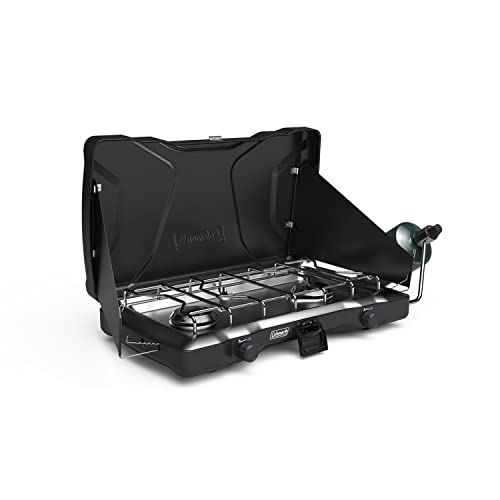
| 22,000 (Coleman Triton 2-burner, both burners on high) | 1 hour | 19.6 hours | About 1.6 hours |
| 24,400 (2-burner camp stove) | 0.9 hours | 17.7 hours | About 1.5 hours |
| 25,500 (Royal Gourmet 3-burner griddle) | 0.8 hours | 16.9 hours | About 1.4 hours |
| 28,000 (Coleman Classic 3-burner) | 0.8 hours | 15.4 hours | About 1.3 hours |
| 30,000 (2-burner griddle with hood) | 0.7 hours | 14.4 hours | About 1.2 hours |
| 40,000 (Camp Chef Everest 2X) | 0.5 hours | 10.8 hours | About 0.9 hours |
| 60,000 (Camp Chef Explorer 2-burner, total) | 0.4 hours | 7.2 hours | About 0.6 hours |
| 90,000 (Camp Chef Explorer 14, 3-burner total) | 0.2 hours | 4.8 hours | About 0.4 hours |
Propane holds about 21,600 BTU per pound, so a standard 16.4 oz (1 lb) cylinder holds about 21,600 BTU and a 20 lb tank holds about 432,000 BTU. Hours on high assume the full rated BTU output running continuously, which is rarely how anyone actually cooks. Typical cooking averages about 60 percent throttle, which is why the last column stretches the 1 lb cylinder figure by roughly a third to two thirds longer.
Gear that matches this chart

| Burner output (BTU/hr) | Hours on high, 8 oz butane canister (10,600 BTU) | Typical hours at about 60 percent throttle |
|---|---|---|
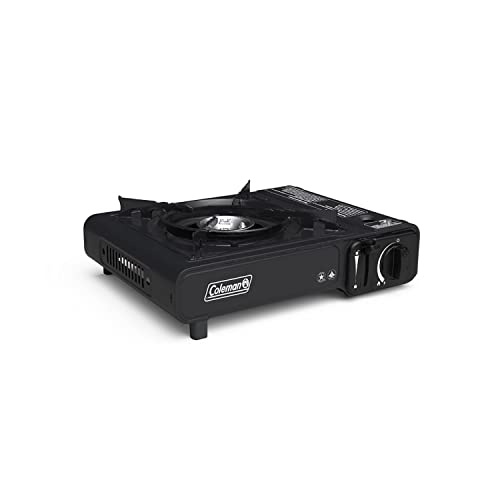
| 7,650 (Coleman Classic 1-burner, GasOne 1-burner) | 1.4 hours | About 2.3 hours |
| 15,000 (Iwatani 35FW butane cooktop) | 0.7 hours | About 1.2 hours |
Butane canisters hold about 10,600 BTU at 8 oz. Butane also vaporizes poorly near freezing, so cold-weather burn times run shorter than these figures even at the same BTU rating, since dropping internal pressure reduces effective output before the canister is technically empty.
How do I calculate how much propane to bring on a trip?
Start with your stove's BTU rating, then estimate how many hours you will actually run it: boiling water for coffee, cooking breakfast and dinner, maybe a pot of something at lunch. Multiply your stove's BTU/hr by expected cooking hours per day, then compare that to a 1 lb cylinder's 21,600 BTU or a 20 lb tank's 432,000 BTU to figure out how much fuel to pack. Run your specific stove and trip length through the propane calculator for an exact number.
Why does typical cooking last longer than the 'hours on high' number?
Running a burner flat out on high is mostly reserved for quickly boiling water; simmering, warming, and most actual cooking happens at a lower flame, commonly averaging around 60 percent of full throttle. That lower average draw is why a 1 lb cylinder that would empty in an hour on full blast can realistically stretch to an hour and a half or more across a normal cooking session.
When does a 20 lb tank make more sense than 1 lb cylinders?
A 20 lb tank holds about 20 times the fuel of a single 1 lb cylinder and costs less per BTU once you factor in an adapter hose, which typically pays for itself within a few refills. It becomes the clearly better option on trips of three or more days with regular cooking, or for anyone running a griddle and a stove off the same tank. For a single weekend, one or two 1 lb cylinders remain simpler to pack and use without an adapter hose.
Does cold weather change these burn time numbers?
Propane holds up reasonably well in cold weather compared to butane, though pressure still drops some below about 40F, which can slightly reduce effective burner output even with fuel remaining in the cylinder. Butane is affected far more severely near freezing, since it needs a warmer temperature to vaporize at all, which is why the butane burn times above should be treated as optimistic in cold conditions. See the full comparison at propane vs butane stove.
Keep planning
Frequently asked questions
How long does a 1 lb propane cylinder last on a 2-burner stove?
Running both burners on high on a 22,000 BTU stove empties a 1 lb cylinder in about an hour, per Coleman's own rating for its Triton stove. Typical cooking at a lower average throttle stretches that closer to an hour and a half in real use.
How many 1 lb propane cylinders should I bring for a weekend trip?
For a family cooking three meals a day on a 2-burner stove over a weekend, budgeting two to three 1 lb cylinders is a reasonable buffer, though exact needs depend on your specific stove's BTU rating and how much you cook. Check your numbers on the propane calculator.
Is a 20 lb propane tank worth bringing on a 3 day trip?
Often yes. A 20 lb tank holds about 432,000 BTU, roughly 20 times a single 1 lb cylinder, and becomes cheaper per BTU with an adapter hose on trips of three or more days with regular cooking, avoiding the need to pack or buy multiple small cylinders.
Why does butane burn out faster than propane in cold weather?
Butane needs a warmer temperature than propane to vaporize from liquid to usable gas. As a butane canister approaches freezing, internal pressure drops and burner output falls even though fuel technically remains inside, which is why cold-weather butane burn times run shorter than the rated figures.
How much propane does a griddle use compared to a 2-burner stove?
It depends on the specific griddle's total BTU rating across its burner zones, which can match or exceed a typical 2-burner stove. Check the griddle's stated BTU rating and compare it against the burn time chart above rather than assuming a griddle uses less fuel because it has one continuous surface.
Get the car camping checklist
One printable page: the full packing checklist plus our three complete setups with current prices. No sales sequence.
Used only to send the list. You can also read every setup free on this site.Researched guidance, not professional advice. Figures are published specifications or clearly labelled conventions; check your own gear's manual and your campground's rules.